Introduction
For many small business owners, the “back office” is the least exciting part of the business—and often the most neglected. Tasks like financial management, standard operating procedures, payroll, and internal communication tend to fall to the bottom of the priority list, especially when owners are busy serving customers and driving revenue.
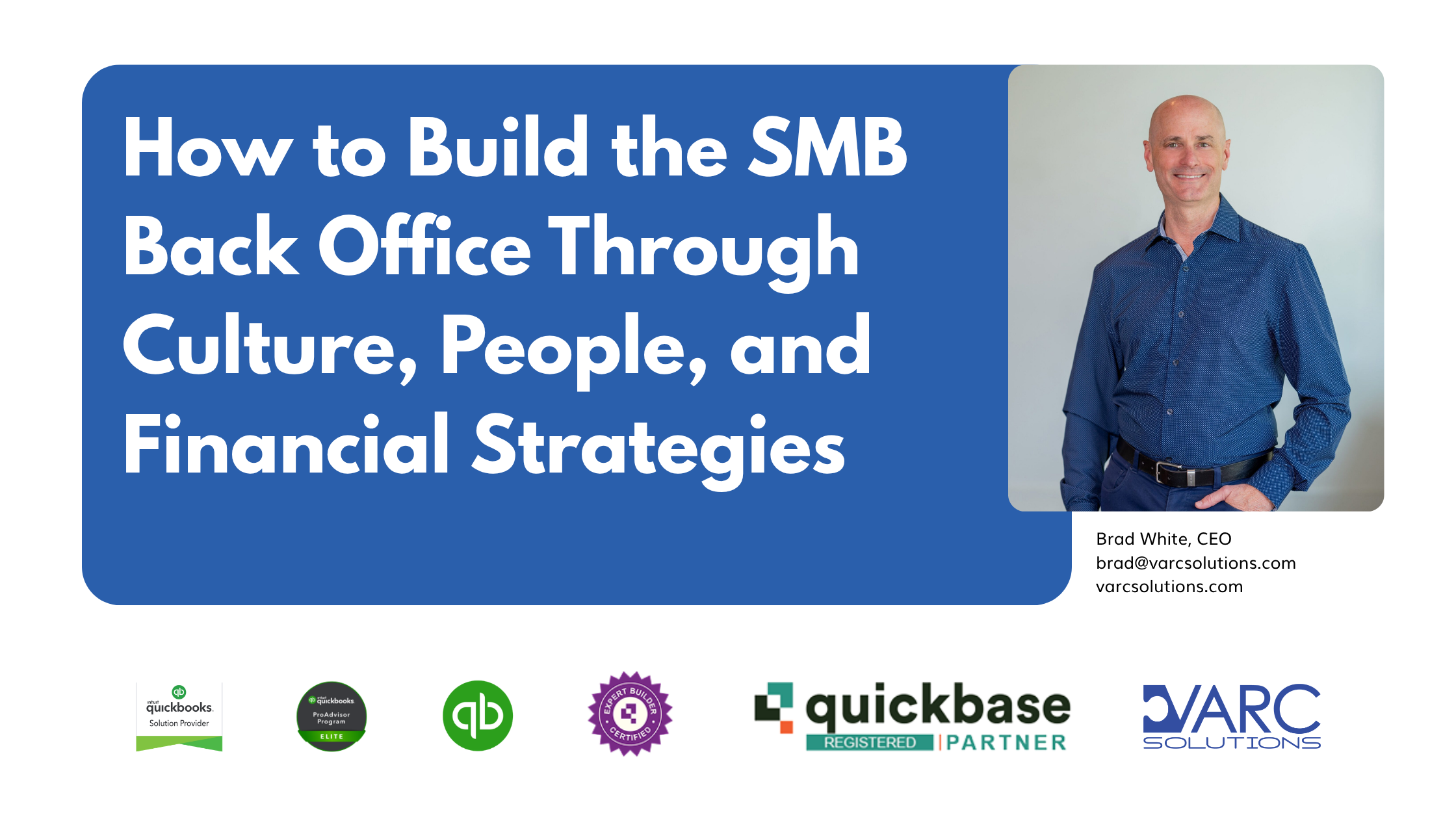
In the podcast episode “How to Build the SMB Back Office Through Culture, People, and Financial Strategies,” Brad White is joined by David Needham of ERO Consulting to unpack what it really takes to build a strong, sustainable back office. Their conversation reveals that success doesn’t come from systems alone—it comes from aligning culture, people, and financial discipline into a cohesive operating model.
What the “Back Office” Really Means for Small Businesses
The back office is everything that happens behind the scenes to keep a business running smoothly. It includes:
- Financial processes like bookkeeping, payroll, billing, and taxes
- Standard operating procedures (SOPs) and guidelines
- Clear roles and responsibilities for team members
- Internal systems that ensure consistency and accountability
While this work may feel “unsexy,” David emphasizes that when the back office is built well, it allows the front end of the business—sales, service, and growth—to operate more effectively.
Why Culture Starts at the Top
Culture isn’t defined by mission statements or posters on the wall—it’s felt in every interaction, from the first phone call to day-to-day employee communication.
David explains that culture is inherently top-down. Owners and leaders set the tone through:
- How they communicate
- How they listen to feedback
- How they respond to mistakes
- How they treat employees and customers
When leaders model openness, respect, and consistency, that behavior cascades through managers, staff, and ultimately to the customer experience.
Turning Culture Into Practical Systems
Culture and systems aren’t opposites—they reinforce each other.
David highlights that strong SOPs should reflect how a business wants to operate, not just what needs to be done. When procedures are written with clarity and respect, employees feel empowered rather than controlled.
Instead of command-and-control language, effective systems:
- Encourage ownership
- Clarify expectations
- Reduce confusion
- Create consistency without micromanagement
This alignment makes processes feel natural rather than forced.
Empowering Leaders Instead of Creating Dependency
A key theme of the episode is leadership development. David stresses that leaders should be trusted to do the jobs they were hired to do.
One practical framework he uses is the “1-3-1 method”:
- Identify 1 problem
- Propose 3 possible solutions
- Recommend 1 best option
This approach encourages critical thinking, reduces dependency on the owner, and helps leaders grow through decision-making rather than waiting for answers.
Mistakes, when handled correctly, become teaching moments instead of failures.
Financial Strategies That Create Clarity and Control
Strong back offices require disciplined financial systems. David shares a simple but powerful approach: intentional cash allocation.
Instead of reacting to bills as they arrive, he recommends:
- Collecting all income into a single account
- Allocating funds monthly into specific “buckets” (payroll, taxes, operating expenses, capital improvements, profit)
- Paying bills on consistent, scheduled dates
- Using calendar reminders to reduce mental load
This system gives owners visibility, predictability, and control—allowing them to stay ahead instead of constantly reacting.
Using Financial Discipline to Support Growth
One of the most impactful benefits of this approach is how it supports growth decisions.
By allocating payroll as a percentage of revenue and building a buffer over time, business owners can clearly see when they are financially ready to hire. This removes guesswork and reduces the risk of overextending.
Ultimately, the goal is to buy back the owner’s time—freeing them to work on higher-value activities that drive long-term growth.
Working With Your Spouse in the Business
David also shares insights from running a business with his wife, highlighting both the advantages and challenges.
Key lessons include:
- Clear communication boundaries between “partner” and “boss”
- Avoiding emotional reactions in professional conversations
- Proactively sharing feedback to prevent employees from playing sides
- Being intentional about tone, especially during conflict
This dynamic forced David to become a better communicator—an improvement that benefited the entire team, not just the partnership.
Common Mistakes and Lessons Learned
One of the biggest mistakes David admits to making early on was letting emotions lead communication. Reacting too quickly or too harshly—especially with someone you trust—can damage culture and morale.
The lesson:
Pause, think, and choose words carefully. Strong leadership requires emotional discipline as much as operational skill.
Conclusion
Building a strong small business back office isn’t about complexity—it’s about alignment.
When culture, people, and financial strategies work together, businesses gain clarity, consistency, and confidence. Owners regain time, leaders grow into their roles, and financial decisions become intentional instead of reactive.
The back office may never be glamorous, but when it’s built right, it becomes one of the most powerful drivers of sustainable growth.